Showing posts with label Website. Show all posts

Tuesday, January 06, 2009

The Lake Alice Hospital

The Lake Alice Hospital website is the only/first website dedicated to the notorious psychiatric hospital. A snippet from their history page.

Located at Rangitikei New Zealand, it was opened In August 1950

Lake Alice is named after the Lake which shares the same name, which is the second lake to the south of the estate. Built as a psychiatric hospital, the complex consists of 56 Acres with 10 two story 11 bed villas, a fire station, 2 swimming pools, Maximum secure villa, large staff housing building, 2 libraries, a large community hall, chapel, morgue and 4 two storied 50 bed villas along with plenty of garaging, administration building, glass houses gardens, separate dining rooms & several rugby/cricket patch’s.

[...] The most unbelievable tale to be told was the behavior that went on between the patients & the staff.

During the early 1970's- 1980’s mistreatment went on towards patients who were given ECT, also known as electro-convulsive therapy (shock treatment), with most of the time this would cause the person to pass out. Painful injections of paraldehyde were also a common practice. There has been many rumors of sexual abuse.

While there could never be away to replace what happened to these people there has been government pay outs to sums of over $10 million to the claimants.

The hospital doors where officially shut in late 1999. Now days the hospital stands abandoned most of the buildings are very run down & trashed from either outsiders or cattle which roam the land.

People do live onsite to keep the property secure from further vandals

In July 2006 the 56 acres & buildings was sold to a developer, who has plans to develop the estate, He hopes to subdivide the property although there has been no progress since it was brought.''See newspaper articles for more information''


This is a decent website, although the text needs some polishing, spell and grammar checking, etc. to look more professional, and some of the local color of New Zealand English should be kept. There are a number of photos of the various facilities at the hospital, not available elsewhere.

Also, the site is somewhat sympathetic to the mental health industry, which is a minus, because of the massive profiteering that goes on with people's lives. The website author does have a specific page dedicated to the scandal, but there is so much more that could be said about it. We at Psychwatch have a number of earlier stories about the Lake Alice Scandal and some of the criminals involved

The web author misses the social veneer of an industry that with a pleasant smile cheerfully fried the brains of dozens of people, which is unfortunate. This is a common mistake, although sheer incompetence is also a fault in the industry.

Thursday, September 25, 2008

Welcome to Chemical Imbalance.org

As posted as an introduction on Chemical Imbalance.org

This website provides scholarly information on mental health topics of interest to helping professionals, as well as to the general public. We focus primarily on two controversial areas in the field of mental health. First, we examine the popular notion that depression and anxiety are caused by an imbalance of neurotransmitters which is corrected by antidepressant medication. Second, we discuss the influence of the pharmaceutical industry on psychiatric research. We also cover related topics, such as consumer advertising of psychiatric medications, clinical trial research, and media coverage of these issues.

The information on this site is for educational purposes and does not constitute medical advice. If you take psychiatric medications, please be aware that stopping them suddenly can be dangerous. Please consult with your prescribing physician regarding all treatment decisions.
We welcome them to the discussion.

Monday, January 21, 2008

SSRI Research - What Do I Need to Know about Antidepressants?

SSRI Research is a small but interesting website with a good collection of materials regarding the side effects of SSRIs. They have pages dedicated to

It is also one of several sites dedicated to the cause of Christopher Pittman.

Christopher Pittman (born April 9, 1989 in Huntsville, Alabama) was convicted in 2005 of murdering his grandparents at age 12. The case drew national attention in part because of his age at the time of the crime, and in part because his defense that the prescription drug Zoloft caused him to act.

It is likely that his dosage of Zoloft was absurdly high even by common psychiatric standards.

Friday, September 14, 2007

Psychologists for an Ethical APA

What a novel Idea!

I cames came across this thought courtesy of the Invictus Weblog

Psychologists for an Ethical APA (PEAPA) has updated their website with a collection of valuable links related to the ongoing crisis in American psychology over the refusal of the APA to ban its membership from participation in interrogations at sites linked to U.S. abuse and indefinite detention of detainees. The latter has been condemned by organizations around the world.

PEAPA is a collection of psychologists within the American Psychological Association who fought for a moratorium against psychologists at detention centers such as Abu Ghraib, Guantanamo Bay, and CIA "black site" secret prisons. Unfortunately, the craven APA leadership put out a resolution that, while noble in words, and taking certain strong stands against practices such as waterboarding and mock execution, left the door open for practices that allow harm, such as sensory deprivation and overload, solitary confinement/isolation, and the use of drugs in some circumstances.

The new links at PEAPA include: two important articles at Harper's on the recent events at APA by Scott Horton and Mark Benjamin; Amy Goodman's article, "Psychologists in Denial About Torture"; Jean Maria Arrigo's presentation at the 2007 APA convention on how APA politically controlled, with assistance from the Department of Defense, a blue-ribbon APA committee meant to set policy related to interrogations and torture back in 2006; and psychologist Mary Pipher's statement of protest regarding APA policy, made as, in a matter of principle, she returned her 2006 APA presidential citation award; and much more.

Friday, August 10, 2007

Fake Diseases and their Medications

The socially incorrect site Fark currently has a photoshop contest for, as they state it: Design an ad for a new drug designed for a "made-up" disease.

Here are a few that seem slightly amusing to me. Of course, some of the ones on the original page are politically incorrect or somewhat offensive, so be warned.


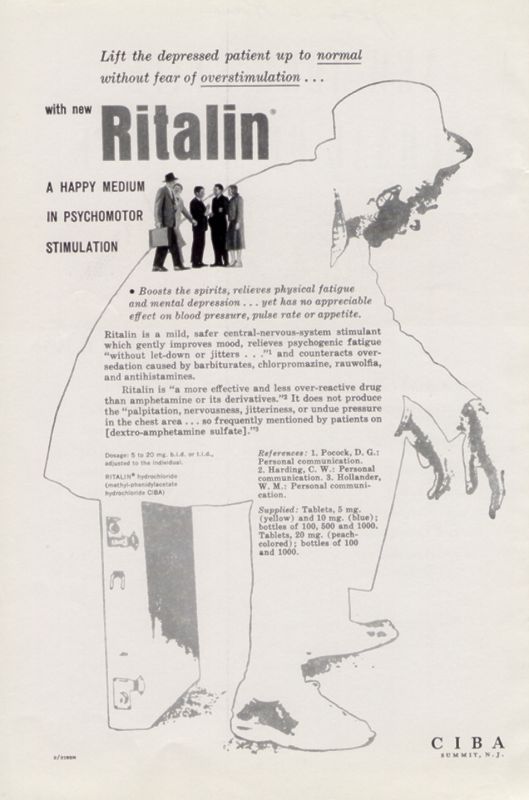
The following are real ads that can also be down right scary.

The Lysol Ad is a real ad from the early 1950s.


Monday, May 07, 2007

Mental Hospital Deaths: State of Georgia often ends probes without all the evidence, Key questions left unasked

As seen in this report

Despite intensifying scrutiny, Georgia's state mental hospitals continue to absolve themselves in patients' deaths while leaving key questions unanswered, or even unasked.

At least five times state officials concluded investigations into suspicious deaths in 2007 before receiving autopsy reports, a review by The Atlanta Journal-Constitution shows. In a sixth questionable case, the patient's family declined to have an autopsy performed.

The investigations into these six suspicious cases, detailed in reports filed during the first quarter of 2007, show that the state still completes inquiries without always fully examining factors that led to patients' unexpected deaths. The Journal-Constitution reported in January that at least 115 patients from the seven state hospitals had died under suspicious circumstances from 2002 through 2006 and that state investigations had often been incomplete.

In a January case, a patient at Central State Hospital died three days after a doctor warned that the man may have been prescribed a lethal dosage of an anti-psychotic drug. Yet the state investigation concluded without examining whether the medication contributed to the man's death.

In February, a 24-year-old patient at Southwestern State Hospital died in what the facility's clinical director described as "a medical mystery." The doctor added, "Twenty-four-year-old men don't die from unknown causes very often." But investigators cleared the hospital without waiting for autopsy results. State officials say their long-standing system of self-policing is effective and allows them to revisit conclusions about deaths if new information emerges.

Outside review sought


But in response to the Journal-Constitution's latest findings, advocates for mental health consumers and experts in psychiatric care said they had expected more thorough death examinations in response to the newspaper reports, subsequent criticism from state legislators and a recently announced investigation of the hospitals by the U.S. Justice Department.

"It can't be a definitive report if the autopsy has not been factored in," said Dr. Sidney Weissman, who teaches psychiatry at Northwestern University's medical school in Chicago and serves on a panel that reviews deaths in Illinois' state hospitals.

Ellyn Jeager, of the advocacy group Mental Health America of Georgia, said: "It's another reason why they shouldn't be investigating themselves . . . There needs to be independent oversight."

Gwen Skinner, director of the mental health division of the Georgia Department of Human Resources, which runs the hospitals, said at a recent meeting that she supported the idea of outside review. Last week she ordered the hospitals to request an autopsy on every patient who dies under state control. Previously, local coroners and patients' families had the discretion to request or decline autopsies.

Regardless, Human Resources officials contend the current system produces thorough, timely investigations.

Within 30 days of a patient's death, the mental health division's investigative unit is supposed to file what it calls a "final report." Those reports typically include a chronology of events leading to the death, interviews with hospital workers involved with the patient, and conclusions about whether the facility is culpable.

Neither autopsy reports nor death certificates, which also list the cause of death, generally are available in 30 days, said Mona Givens, who heads the investigative unit. The agency's medical director later goes over documents related to the cases, including internal reviews by physicians. The medical director then "makes the decision about the [quality of] medical care and can effect any changes that she thinks are necessary," Givens said.

Whether to conduct additional investigation is decided "case by case," Givens said.

'Mystery' death

Officials said late last week they could not say whether recent cases warranted further examination.

Among them was the "mystery" surrounding the death of the 24-year-old patient at Southwestern State in Thomasville.

The man had been hearing voices telling him to kill himself and others, the state's report says. The man's identity, like that of others who died during the first three months of 2007, was redacted from public documents; as a result, the newspaper could not obtain autopsy reports or other patient information.

The hospitals' policies call for complete physical examinations of newly admitted patients. But staff members at Southwestern State decided the 24-year-old was too agitated to provide samples for routine lab tests. Thus, reports say, doctors had no idea what was wrong with him about a day into his stay when he exhibited a "change in level of consciousness."

Still, before autopsy results came in, investigators concluded the hospital's staff acted "in accord with hospital policy and procedure."

Such conclusions are common, the Journal-Constitution found, even when the investigators' reports contain contradictory information.

When a 46-year-old patient at Central State died of an apparent intestinal obstruction in January, employees at the Milledgeville hospital told state investigators they had not been tracking the man's bowel movements. Many anti-psychotic medications cause severe constipation, and hospital officials acknowledge that monitoring bowel functions is crucial.

When the Central State patient became ill, "I thought maybe it was something he ate," a licensed professional nurse told investigators. "We were not monitoring his input or outtake. We would not have monitored unless he had a problem."

The investigators, however, reported only that forms recording the patient's bowel movements were missing from his medical chart. Their conclusion: "All policies and procedures were followed."

Conflicting conclusions


The failure to reconcile hospital employees' statements with the investigators' conclusions is among the glaring omissions in cases from 2007 that the newspaper reviewed.

The investigation into the death of the patient whose anti-psychotic dosage had been flagged by a physician made no attempt to determine what role the medication played, if any, documents indicate.

The 64-year-old man had been transferred to Central State from Georgia Regional Hospital/Atlanta three days earlier. The physician who examined him in Central State's admissions unit questioned whether doctors in Atlanta had prescribed too high a dosage of a medicine called Zyprexa. The Central State physician, Dr. Louis Barton, told investigators he disagreed with the patient's diagnosis and "could not reconcile or continue to recommend the medication prescribed" in Atlanta.

Even if he needed Zyprexa, Barton said, his dosage was potentially lethal for a person his age, especially one with dementia. Zyprexa is thought to increase the risk for a stroke in such patients.

His supervisor rejected his concerns, Barton told investigators.

"The referring physicians were not practicing the standard of care," Barton said. But "I have been instructed to order what the referring physicians recommend and [let] the client's attending physician make any adjustment."

At Central State, doctors instructed nurse's aides to keep the man within their sight at all times. On the man's third night there, he kept getting out of bed and, because of his unsteady gait, workers feared he might fall. So an aide sat with him in his room.

The aide told investigators the man said he used to be a math teacher and, to pass the time, he helped her with homework for a math class. She left after the man went to sleep. When she returned two hours later, he had died.

Investigators did not know what caused the man's death. But, their report concluded, "all policies and procedures were followed."

Except for one.

The investigators said the nurse's aide had engaged in "activities other than official business" by doing her math homework with the patient. They recommended that she be disciplined.

Thursday, March 01, 2007

Nurses for Human Rights

Another blog in the role call against Psychiatric Abuse Here is an introduction to the weblog from the author:

I’ve been a Registered Nurse for almost 30 years. I’m also a Father, Grandfather and Human Rights Activist. As a Nurse, I am an advocate and protector of my patients and look after their wellbeing.

Currently, I am concerned about the direction of our nation and how our medical field is influencing society for the good and bad. I am concerned that the mental health community is acting on false testing and research regarding brain chemical imbalances and brain changes on radiologic studies. These have been proven to be false or flawed.

I am also concerned about the heavy advertising dollars from pharmaceutical companies with ads based on poor science pushing their agenda of medicating our children and populace, and the alarming increase of medicated individuals for mental illnesses that could very well be underlying physical illnesses instead.

This site is my request for help from my fellow nurses to take a stand for HUMAN RIGHTS as I believe that two basic human rights are being violated.
  1. The Right to Life and
  2. Freedom from torture or to cruel, inhuman or degrading treatment or punishment.
I will voice my viewpoints here and I am asking like-minded nursing personnel (CNAs, LPNs, RNs, ARNPs, LNCs, etc) to voice their opinions and to join me in forcing our concerns to be reviewed by the government lawmakers and other agencies that oversee the areas and to alter the course we are upon with the drugging of our children.

Our futures are at stake and our childrens’ futures are at stake. What we do today and forward will determine if our society will be free to think without mind altering drugs, for children to be able to express their free emotions and creativity without being drugged, and our seniors to live out their final days without being sedated and out of touch with humanity and the ones who love them.

From the UN website :


On December 10, 1948 the General Assembly of the United Nations adopted and proclaimed the Universal Declaration of Human Rights the full text of which appears in the following pages. Following this historic act the Assembly called upon all Member countries to publicize the text of the Declaration and “to cause it to be disseminated, displayed, read and expounded principally in schools and other educational institutions, without distinction based on the political status of countries or territories.”

Go to this site http://www.un.org/Overview/rights.html

Article 3 - The right to life, liberty and security of person -

It’s my belief that the use of psychotropic and psycho-pharmaceuticals on children are a violation of this right for them as human beings. Yes, they are too young to make medical decision for themselves, I know that argument, but psychiatry is not based on scientific, biologic fact. It’s subjective and can different from psychiatrist to psychiatrist. This is not about antibiotics for strep throat or insulin for diabetes. This is about someone deciding you are mentally ill by your behavior or emotional state alone and with no valid biological test.

Also, I totally disagree with using these drugs on children as they are not approved for children and certainly have been found and documented to adversely affect them. This blog has many references to that fact. Our history has shown that using the latest and greatest new psych drug on patients with “wonderful effects” like Thorazine certainly did not prove being wonderful at all considering the neurological damage and EPS symptoms that followed, now permanent on these long time users.

SSRIs have proven to cause suicidal thoughts and behaviors with teenagers and there is now a black box warning from the FDA. It has been proven without doubt that the drug companies hid this data. How can we stand by and let psychiatrists now medicate children from 0 to 5 years old (yes, you read that right) on these false “chemical imbalance” theories and no FDA approval to use them on that age group?

Article 5 - No one shall be subjected to torture or to cruel, inhuman or degrading treatment or punishment -

To me, as a nursing professional, the use of chemicals on our children is cruel, inhumane treatment. Unsuspecting parents, wanting to do something supportive and help their children, find themselves being told by professionals like Pediatricians, General Practice Physicians, Psychologists and Psychiatrist that they need these harmful drugs to “regain normalcy”.

I have evidence that mental health manifestations are actually biologically traced to physical conditions of the body that can be corrected with BIOMONITORING techniques. The child has no choice here to live without being drugged once in the mental health arena, to have a free mind to think and be creative without distortion of these drugs, and to have their natural physical energy without chemicals interfering. I feel this is a violation of their human rights which could have been prevented in some cases by using INFORMED CONSENT.

WhistleBlowers Documents Exposed (WBDE)

WhistleBlowers Documents Exposed (WBDE) is a website concerned with political corruption around the World. Currently the site seems to be most active in Australia

The important angle here is the exposure of the practice of Political Psychiatry, and the use of psychiatry to protect the corrupt at the expense of the honest.

WhistleBlowers Documents Exposed (WBDE) is a self-funded community-based initiative as recommended in United Nations Convention Against Corruption to combat corruption. We aim to curb the use that some individuals and organizations make of using public resources for their own private purpose of punishing and discrediting dissenters, silencing free speech, and covering up

"WhistleBlowers Documents Exposed (WBDE) is a self-funded people's initiative arising from our dissatisfaction with the performance of some existing funded organizations and personnel, who are considered to have failed to perform their duties effectively, within the law, and in the public interest. Preventing public corruption also requires an effort from all members of society at large. For these reasons, the United Nations Convention Against Corruption calls on countries to promote actively the involvement of non-governmental and community-based organizations such as WBDE, as well as other elements of civil society."

Monday, January 22, 2007

Parents say psychiatrist agreed with confinement

Another report from Wisconsin on this sad case Unfortunately, the proof of the allegations are tied up in claims of patient confidentiality. And sometimes, reports of the most outrageous crimes are not believed because they are so outrageous. Here we have a situation where patient confidentialtiy could be used to cover up a crime.

Clint and Lynn Engstrom told police they were acting under a doctor's supervision when they installed an alarm system on their daughter's bedroom door and confined her to her room.

The Engstroms allegedly locked their 13-year-old daughter in her room for 22 hours a day for nearly two years as punishment for misbehaving, but doctors say regardless of a child's behavior, that type of punishment is not appropriate.

"I can't image anyone would recommend this kind of treatment for any child," said Dr. Karin Suesser, a psychologist with Aurora Medical Group. "Either they misunderstood what was said or they were just flat out lying. But I can't think of any reason why anyone would say, 'Yeah, this is a good idea.'"

Clint Engstrom, 32, and Lynn Engstrom, 35, were charged last week in Winnebago County Circuit Court with causing mental harm to a child, a felony that carries a maximum penalty of 12 years and six months in prison and a $25,000 fine.

In the criminal complaint, Lynn Engstrom told detectives the girl was allowed to leave her room for meals, to go to the bathroom and complete chores.

Lynn Engstrom told police there were times she and Clint Engstrom questioned what they were doing, but the psychiatrist treating the girl told them not to give in.

Clint Engstrom told detectives that he installed an alarm on the girl's bedroom door because they had problems with the girl sneaking out of her room to eat candy or watch TV. He said the alarm was a suggestion the psychiatrist made, the complaint states.

The psychiatrist named by the Engstroms issued a statement declining comment based on patient confidentiality.

"Our clinic has a history of working with the court system and local law enforcement," the statement said. "However, based on patient confidentiality, the release of information needs to be done in accordance with Wisconsin and federal rules and rules set up by the court."

Health professionals said the girl may be able to reverse some of the effects of her ordeal if she gets professional counseling.

"The most important thing for her is to be able to talk and have other people validate that this is not her fault and she didn't do anything wrong," Suesser said. "She's still young enough that she can catch up. It's not necessarily damage for life, but it can be. It depends on what happens from here on."

But even with help, she may still feel the effects throughout the rest of her life.

Baron Perlman, a professor of psychology at the University of Wisconsin-Oshkosh, said the girl is at an increased risk for developing post-traumatic stress disorder, suicidal behavior, an eating disorder or depression.

"You don't know. People are very resilient and significant others might make a difference," Perlman said. "The situation is horrific by any perception or definition."

Despite public shock at the way the girl allegedly was treated, Perlman said incidents of this sort are more common that people think.

"Anyone working for a social services or child welfare department in the state will tell you this happens," Perlman said. "But this is the end of the scale. This is more dramatic."

For now, the focus needs to be on getting the girl who survived the ordeal the professional help she needs in order to overcome the abuse and regain some sense of normalcy.

"She's going to need professional intervention, significant others there for her in positive ways and luck," Perlman said.

Monday, January 08, 2007

Bad SLS Health

The Bad SLS Heath weblog is dedicated to documenting abuses and crimes at the Supervised Lifestyles facility. Supervised Lifestyles, based in Brewster, NY, has been accused of abusing patients, dishonesty, deceptive practices, illegal restraints, and much more. This blog is one of several forums meant to specifically expose the wrongs of the program and it's owner Al Bergman.